Business and mining leader Mark Cutifani to deliver keynote speech at the 3rd Mining Armenia Forum
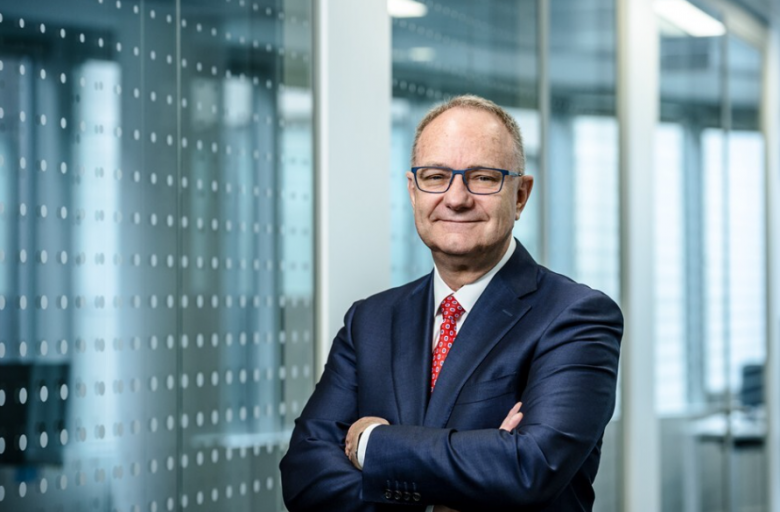
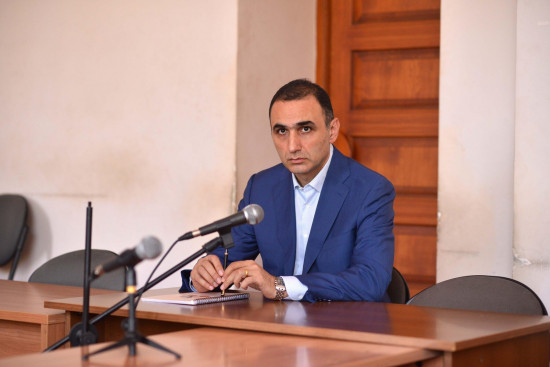
Mark Cutifani, one of the most influential figures in global business and the mining industry, is a keynote speaker at the 3rd Mining Armenia Forum. This offers an important opportunity to explore Armenia’s mining development prospects, investment opportunities, and role in the global market through the lens of international experience.
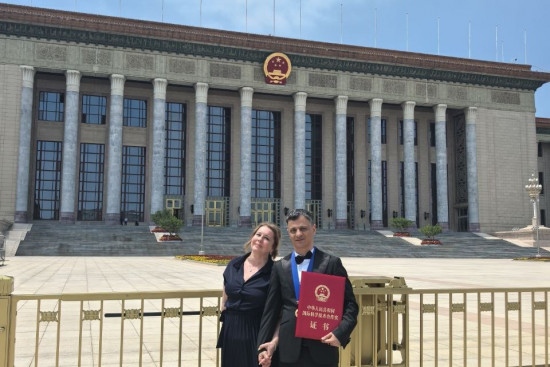
Mark Cutifani has spent decades shaping the sector through periods of significant transformation, technological advancement, and evolving expectations around sustainability and responsible resource development. Throughout his long career, he has witnessed major changes in the industry, from technological advancements to growing expectations around environmental and social responsibility. In recognition of his contribution to the global mining industry, Mark Cutifani was awarded a CBE (Commander of the Order of the British Empire) for his “contribution to Global Mining Investment” and was named in the UK’s 2024 King’s New Year Honours List.
In this interview, we discuss the forces that will shape the mining industry over the next decade, the factors that determine a country’s competitiveness in the sector, and the opportunities Armenia can leverage to strengthen its position in the global market.
-You are widely regarded as one of the defining leaders of modern mining - someone who has helped shape the industry through decades of transformation. From that vantage point, what do you see as the most important forces reshaping mining today, and which of them will define the industry over the next decade?
I think the key issues that will shape our industry are and will be society’s perception of our contribution to quality of life. The better we articulate our message, the more support we will get for new mineral developments. Increasing mining depths will force us to think differently about how we mine. In that context, and in other ways, innovation will become an imperative, not simply an opportunity to do better.
Our focus on reconciling mining and nature, in the context of how we impact local communities and broader regional economies, will become a material competitive advantage. If I connect this point to my first point, helping people understand why we are so important is not simply about the products we produce; it is also about how we help reduce our global human footprint. Industry consolidation will be driven by capital demands and the need to create more competitive investment vehicles for long-term investors.
You have led some of the world’s largest mining companies and have seen the industry evolve over several decades. What, in your view, distinguishes a genuinely competitive and future-ready mining jurisdiction today - beyond simply having strong geological potential?
I think it requires a range of connecting points, including a policy approach and consistency in its application. It is also important to encourage companies to work with and engage local communities, even to the point where government authorities can help facilitate those interactions.
Collaborative regional development is another key factor, where companies and governments work together on common infrastructure solutions. These solutions must work for mining and other commercial interests while also serving communities. The alignment of interests is key, and that is where governments can play a constructive facilitating role.
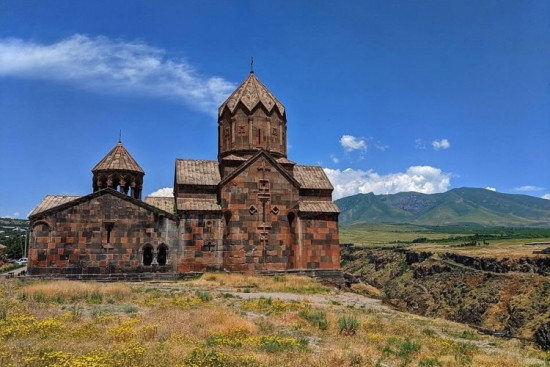
Armenia is a relatively small mining jurisdiction, but it has a long mining history, significant copper and molybdenum resources, and sits in a region that is becoming increasingly important in terms of trade routes and supply chains. Where do you see Armenia’s strongest opportunity to position itself in the global mining landscape?
I think a great starting point is the consolidation of Armenia’s geological database, helping companies and individuals start with a geological framework. African countries are starting to understand the importance of providing potential investors with a starting point based on information that is available. Setting up processes for candidates to bid or express interest in blocks goes with that process.
The focus on copper and molybdenum is a great place to start, but Armenia should not limit itself in terms of what may be possible. If there is one thing we do know, it is that as materials science develops, new applications for metals and minerals can change economic conversations very quickly. Armenia should encourage innovation and different thinking, remaining open to new ideas and new players.
For countries such as Armenia, attracting serious long-term mining investment requires not only resources, but also regulatory predictability, technical credibility, public trust, and strong environmental performance. Which of these factors do you think Armenia should prioritize if it wants to attract higher-quality investment?
Any credible and material mining push requires access to land, supported by a strong set of standards and approaches that bind industry players to a set of minimum safety, environmental, and social standards. You need to attract serious players, and they must be confident in your laws and property rights.
The “technical flow” will follow, based on land rights, geology, and financial potential assessments. Integrated infrastructure, or support for its development, will also be key, as I indicated earlier. Developing basic mining infrastructure is essential, including supporting and building on existing infrastructure.
Social infrastructure, including healthcare and education, is also part of that development. Downstream developments can only follow once you have established competitive energy costs, critical labour skills and other associated capabilities.
You have spoken at many of the world’s major mining events. What made you accept the invitation to come to Armenia and participate in the Mining Armenia Forum, and what are you most interested in understanding or discussing while you are here?
I always start with people. The enthusiasm of people representing Armenia has struck me. My experience over many years is that when you meet people who are so committed to making something happen, that is always a great starting point.
Of course, geology and potential are important. The country’s long history in mining and its potential for copper, molybdenum, and gold are also indicators of other mineral potential. The efforts to open the economy and listen to new ideas represent another great step and an indicator of opportunity.
The great history of innovation and change, makes me think that investment in mining would be well served by people who understand the concept of “possibility.” It seems to me that Armenia is a land of great history, and even greater “possibility.”
Mining Armenia Forum 2026 is organized by the Mining Forum Development Foundation and the Mining and Metallurgical Industry Association of Armenia. The third edition of the Forum is strategically sponsored by Zangezur Copper Molybdenum Combine and Lydian Armenia, with Ameriabank and Teghout CJSC serving as its main sponsors. This year, the Forum will bring together around 50 international and local speakers, including government representatives, investors, sustainable development experts, and technology leaders.
 Тайные инспекторы Michelin в Армении: кто может получить первую звезду?
 Ucom вместе с FPWC примет участие в COP17, представив результаты многолетнего экологического сотрудн...
 «Из класса — на орбиту»: при поддержке Ucom «Космос 1.0» внедряется в 15 школах Армении
 Мы — рабочая сила, которая пашет на иностранное государство?
 Рубеж| Важно оценить, что происходит на армяно-азербайджанской границе․ Аршак Карапетян
 Армения между ОДКБ и новыми вызовами: что стоит за дискуссией о базе в Гюмри
 Риторика Баку не приведет к миру․ Аршак Карапетян
 «Золотой час»։ IDBank объясняет, как правильно действовать после атаки мошенников