An Interview with Fintech Expert Ara Azaryan on Unlocking Growth in Transportation Finance
For transportation CFOs, the equation used to be simple: more trucks on the road equals more revenue. But in today's climate of volatile fuel prices, extended payment terms, and complex global routes, that equation has broken down. Suddenly, a fleet full of orders doesn't guarantee a company full of cash.
To understand why working capital has become the biggest bottleneck in the logistics chain, we spoke with Ara Azaryan, an independent financial technology expert. With a career spanning major financial institutions, Azaryan brings a sharp eye for liquidity management to the unique challenges of the transportation sector. He argues that the only way for CFOs to get out of the traffic jam is to embrace Autonomous Finance.
Alina Nersesyan: Mr. Azaryan, I would like to start with provocative question: "Is Working Capital Holding Transportation Growth Hostage?" From your perspective, is that an overstatement, or is it a new reality?
Ara Azaryan: It is the reality, and it’s becoming more acute by the quarter. We tend to think of transportation as a purely physical business—moving boxes, moving cargo. But financially, it’s a business of waiting. You provide a service today, but you might not see the money for 60, 90, or even 120 days .
When you combine those long payment cycles with the immediate, daily cash demands of fuel, driver payroll, and maintenance, you create a perfect liquidity trap. It doesn’t matter how strong your demand is if your cash is trapped in unpaid invoices. You can have the largest fleet in the world, but if you can’t fuel it, you’re not moving. So yes, working capital isn't just a challenge; it is the handcuff keeping growth from getting behind the wheel.
Alina Nersesyan: The text highlights specific pain points like costly disputes and fragmented global operations. In your experience working with complex financial ecosystems, which of these proves to be the most insidious "cash killer"?
Ara Azaryan: It’s the disputes and deductions. That is the "silent leakage." Long payment cycles
are visible—you know you are waiting for cash. But disputes? They are a black hole.
In transportation, every invoice is a potential battleground. You have fuel surcharges, accessorial fees, demurrage, claims for damaged goods... The list is endless. When a customer deducts a few hundred dollars for a disputed accessorial charge, many finance teams just write it off because
the administrative cost of fighting it is too high. But those "small" deductions add up to millions in revenue leakage over a year.
Fragmented global operations just compound this. You’re dealing with different tax regimes, currencies, and payment behaviors. Without a centralized, intelligent system, you have no visibility into where your cash is or why it’s leaking. You’re flying blind.
Alina Nersesyan: The solution proposed is "Autonomous Finance." For a CFO who is just trying to keep the wheels on, what does that actually mean in a practical, day-to-day sense?
Ara Azaryan: It means moving from a reactive stance to a predictive one. Think of it as the difference between driving by looking in the rearview mirror and driving with a GPS that shows you the road ahead.
Traditionally, finance is historical: "We made this much, we spent this much, let's report on it." Autonomous Finance, powered by AI, is about real-time action and prediction. Practically speaking, it means:
- Intelligent Collections: Instead of your team manually calling everyone who is late, an AI agent prioritizes which customers to contact, when, and even suggests the best communication channel, based on payment behavior.
- Automated Dispute Resolution: The system can automatically match a deduction claim against the original contract or proof of delivery, and either route it for instant approval or reject it with evidence, without a human touching it .
- Predictive Forecasting: It gives you the ability to see a liquidity gap three weeks out, giving you time to adjust, rather than getting a surprise when the fuel bill comes due .
It’s about turning finance from a cost center that processes the past into a growth engine that
navigates the future.
Alina Nersesyan: You mentioned "AI agents." How does that differ from the basic automation software that most transportation companies already have?
Ara Azaryan: Basic automation is like a cruise control. It maintains a set speed on a clear road. But if a car cuts you off, you have to take over. AI agents are like having a co-pilot.
Traditional software follows rigid rules: "If the invoice is over 90 days, send a reminder." An AI agent, however, learns. It understands context. If a major client always pays on day 95 but has never defaulted, the agent learns not to waste resources harassing them. If a new client starts showing signs of risk—like paying late twice in a row—the agent flags that for human intervention. It handles the exceptions autonomously, which is where the real efficiency and cash flow gains are found.
Alina Nersesyan: The ultimate goal is to elevate the CFO from a "passive steward" to a "growth navigator." What is the first step a CFO in transportation should take to make that leap?
Ara Azaryan: Stop looking at your profit and loss statement and start obsessing over your Order-to-Cash cycle. That is the bloodstream of the company.
The first concrete step is to map out your cash conversion cycle in detail. Where are the bottlenecks? Is it invoice delivery? Is it payment processing? Is it dispute resolution? You’ll likely find that the biggest delays are in areas with high manual intervention .
Once you have that map, you don't try to fix everything at once. Pick the biggest bottleneck—often, it's deduction management—and deploy a targeted AI solution to clear that blockage. Prove that you can reduce DSO by five days or cut write-offs by 20% in that one area. When you have that tangible win, you have the credibility and the blueprint to expand Autonomous Finance across the entire organization. That’s how you stop managing cash and start leading growth.
BY Alina Nersesyan
 Устроили клоунаду чтобы удержаться у власти
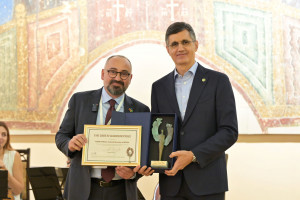 Ucom — стратегический партнер Yerevan Conservation Symposium 2026
 Я знал о его проазербайджанской позиции и, будучи советником, сдерживал его. Аршак Карапетян
 Два медведя, уставшие от азербайджанской оккупации и её тяжёлых последствий для их родного дома
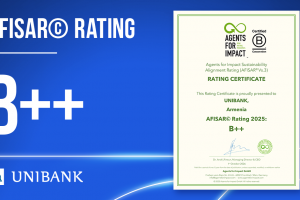 Юнибанк получил рейтинг устойчивого развития B++ от Agents for Impact GmbH
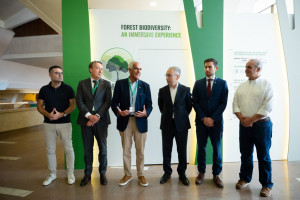 Idram и IDBank приняли участие в открытии павильона «Мой лес Армения» на COP17
 День рождения в Италии с Юнибанком
 IDBank представит экологические и инновационные инициативы на COP17
 Мигранты в обмен на европейское будущее: какую цену готова заплатить Армения?
 При поддержке Ucom фестиваль «SunChild» объединяет кино и заботу о природе